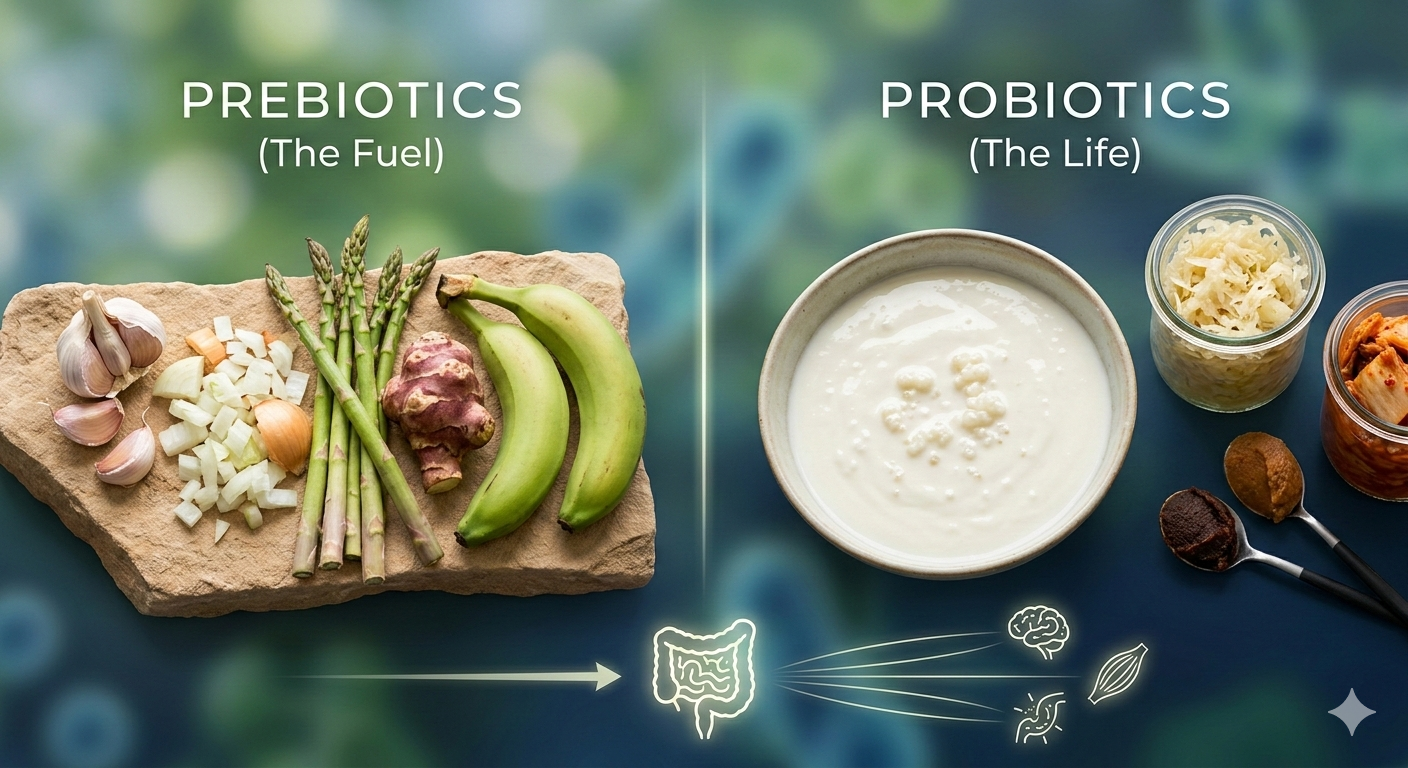
This in-depth dialogue examines the biological interplay between prebiotics and probiotics. Moving past fleeting wellness fads, we analyze the clinical mechanisms by which these components operate internally to optimize digestive efficiency, metabolic health, immune resilience, and psychological balance.
Deciphering the Intestinal Ecosystem
Question: The concept of “gut health” dominates today’s wellness conversations, yet definitions are often vague. From a clinical perspective, what distinguishes a probiotic from a prebiotic?
Answer: The gastrointestinal tract operates as a sophisticated micro-environment teeming with trillions of microbes. Probiotics represent live, friendly bacteria added to this system via supplementation or cultured foods. Well-known varieties like Lactobacillus and Bifidobacterium are extensively researched for their ability to reinforce intestinal harmony and digestive regularity.
Prebiotics, on the other hand, serve as the essential sustenance for these friendly microbes. They consist of non-digestible dietary fibers that pass intact through the upper digestive tract to the large intestine, where beneficial bacteria metabolize them through fermentation.
Deploying probiotics without prebiotics is akin to hiring factory workers without providing them raw materials or energy to operate. Both components must collaborate to maintain a thriving microbial ecosystem and stimulate the release of health-promoting metabolic byproducts within the gut.
Beyond the Stomach – The Role of Postbiotics
Question: While most people turn to probiotics for relief from bloating or bowel irregularity, how do these substances impact systemic bodily functions outside the GI tract?
Answer: Contemporary science reveals that the microbiome governs far more than just food breakdown. A primary responsibility is metabolic signaling. As beneficial gut bacteria ferment prebiotic fibers, they produce bioactive metabolites known as postbiotics, notably Short-Chain Fatty Acids (SCFAs) like Butyrate, Propionate, and Acetate.
These newly formed metabolites drive crucial physiological processes across various biological systems.
- Butyrate nourishes colon epithelial cells and reinforces the structural integrity of the gut lining.
- Propionate aids in regulating hepatic glucose production and maintaining balanced cholesterol profiles.
- Acetate travels into the bloodstream, where it can modulate systemic inflammation and help regulate appetite signals.
Thanks to these comprehensive mechanisms, prebiotics and probiotics extend their benefits beyond mere gastrointestinal comfort, actively supporting metabolic equilibrium, inflammation management, and total body health.
The Gut-Brain Connection and Emotional Health
Question: Scientific interest in the “Gut-Brain Axis” is expanding rapidly. By what mechanisms does intestinal flora influence emotional state and psychological well-being?
Answer: The gastrointestinal tract houses an extensive neural network called the enteric nervous system, frequently termed the “second brain.” Remarkably, a vast majority of key neurotransmitters—such as serotonin and dopamine—are synthesized directly within the intestinal ecosystem.
A landmark clinical investigation utilizing Lactobacillus rhamnosus revealed that specific probiotic strains can modulate stress reactions and emotional equilibrium via biochemical signaling channels connecting the digestive system to the brain.
This advancing frontier of nutritional psychiatry indicates that daily dietary choices and gut microbial balance significantly impact mood stability, mental acuity, cognitive processing, and overall psychological resilience.
Body Composition and Metabolic Regulation
Question: Does clinical research support the idea that prebiotic and probiotic supplementation can assist with body weight control and insulin responsiveness?
Answer: Emerging data indicates that the diversity of intestinal flora heavily influences metabolic performance. Specific microbial strains, notably Akkermansia muciniphila, are strongly linked to enhanced metabolic parameters and more optimal insulin regulation.
Furthermore, prebiotic compounds like Inulin and Fructo-oligosaccharides (FOS) can positively affect the hormonal signaling pathways responsible for hunger management and blood glucose balance.
Dietary Supplementation versus Whole Food Sources
Question: When seeking to optimize gut wellness, should someone prioritize targeted supplements or whole-food dietary modifications?
Answer: Whole-food nutrition consistently serves as the cornerstone for sustainable gastrointestinal health.
- Prebiotic Foods: Staples such as garlic, onions, asparagus, leeks, Jerusalem artichokes, and underripe green bananas provide natural plant fibers that feed essential gut flora.
- Probiotic Foods: Traditional fermented options like Kefir, Kimchi, Sauerkraut, and Yogurt supply a rich, biodiverse array of living, beneficial micro-organisms.
Nonetheless, high-quality supplements remain highly valuable in targeted scenarios—such as rebuilding gut flora post-antibiotic treatment or addressing acute digestive distress.
Safety Considerations and Potential Contraindications
Question: Is it possible for prebiotics or probiotics to trigger adverse side effects?
Answer: Indeed. People dealing with existing GI sensitivities—such as Small Intestinal Bacterial Overgrowth (SIBO)—can experience transient bloating, gas, or discomfort if fibrous prebiotics are added too quickly.
Furthermore, immunocompromised individuals should always consult a healthcare professional prior to initiating potent probiotic regimens. Adopting a slow, incremental dosage schedule is generally advised to allow the digestive tract to adjust smoothly.
Key Clinical Studies and References
- Metabolic Findings: Depommier et al. (2019) – Published in Nature Medicine, analyzing the link between Akkermansia muciniphila supplementation and enhanced metabolic health.
- Gut-Brain Investigations: Bravo et al. (2011) – Featured in PNAS, showcasing the impact of specific probiotic ingestion on emotional response and behavioral patterns.
- Immune Defense: Hao et al. (2015) – A comprehensive Cochrane Review assessing the effectiveness of probiotics in supporting respiratory immune function.
- Short-Chain Fatty Acids: Koh et al. (2016) – Published in Cell, exploring the mechanisms by which dietary fiber fermentation generates vital postbiotic compounds.